The Unfinished Self

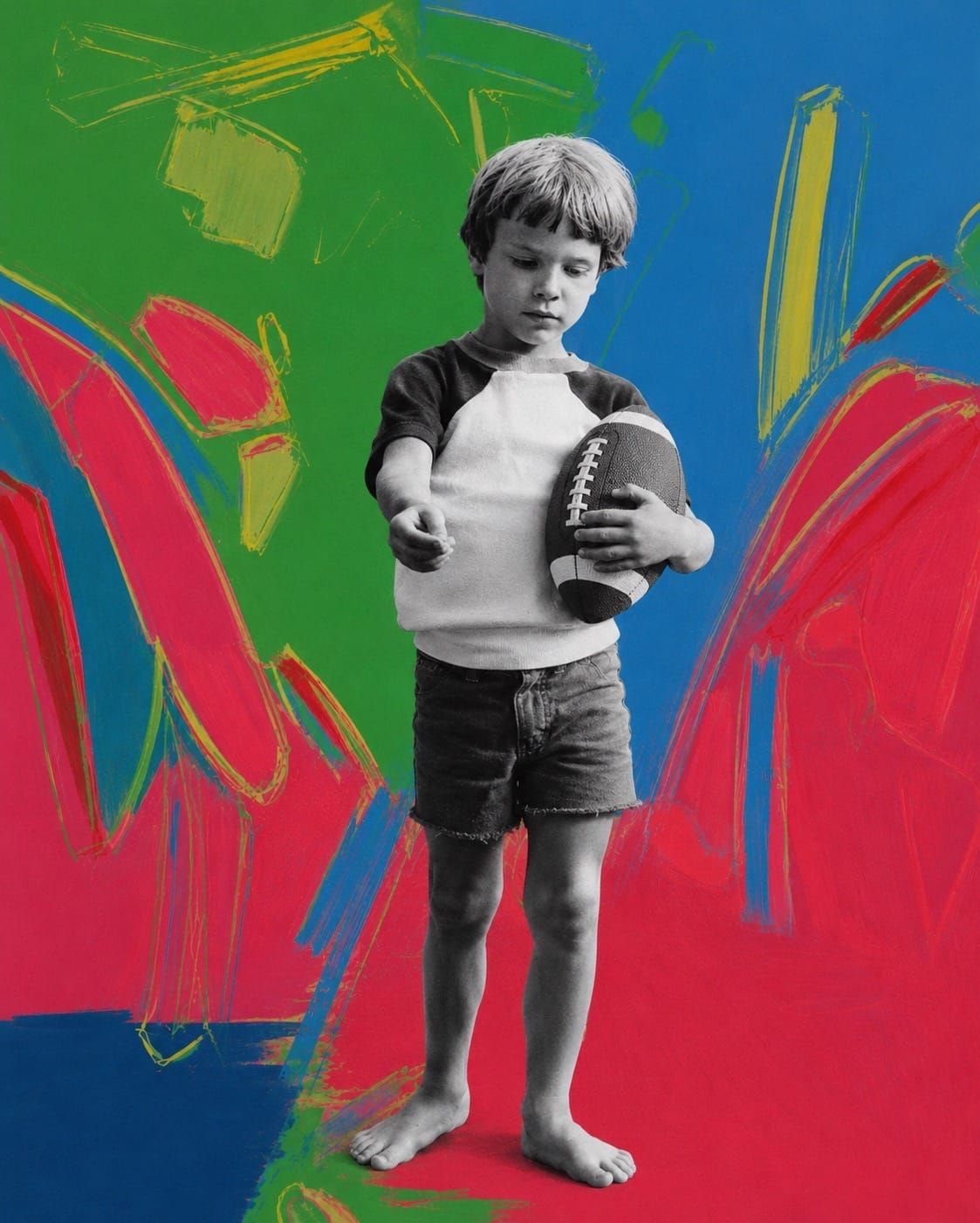
when a child builds a self out of suspect materials
"The greatest hazard of all, losing one's self, can occur very quietly in the world, as if it were nothing at all."
— Søren Kierkegaard
A child builds a self out of the materials at hand. The materials are few, and they are often ordinary: what he notices and remembers, what he wants and loves, how he moves through a room… From these, without ever deciding to, he assembles a working answer to a question he does not yet know he is asking. The whole quiet project rests on an assumption so basic that most children never consciously realise they are making it — that what his own experience tells him can be trusted.
What follows is my attempt to describe what happens when that assumption is denied — not once, and not from one direction, but from several at once, before the child is old enough to have words for any of them. The denials had sources, and I can name them now, though the child could not: a nervous system that would one day be called ADHD, and a way of loving that would one day be called gay. Either alone is enough to complicate the building of a self. Both, in one body, do something worse than doubling — as each raids the materials needed for authenticity, and puts them to other ends. That was the landscape of my childhood, and I have come to believe its weather shaped me more than any single event that occurred there.
I was, by every account including my own memory, too much. Too loud, too fast, too restless — in trouble for a body that would not be still and a mind that would not stay where it was put. This was the early seventies; no one said ADHD. They said hyperactive, and they said it the way you would name a fault in the workmanship. What I understood, long before I understood anything else about myself, was that there was a wrongness in how I was made: other children managed to be acceptable without apparent effort, and I could not, and no one could say why — though it seemed I was expected to have agency over it all the same.
There is a distinction now commonly drawn between guilt and shame — guilt, that a mistake was made; shame, that one is the mistake. A child corrected steadily for what he cannot help does not learn the first. He does not experience himself as bad; he experiences himself as himself, and is then taught, through a steady rain of correction, that himself is the problem. No one draws the line for him between having a condition and being a defect, and so no line is drawn. I could not separate the part of me that was hyperactive from the part that was me, and I concluded, reasonably, that all of me was the fault.
What that taught was not confined to behaviour. You cannot trust how you are: your natural motion through the world is an error awaiting correction. That was the first thing I carried.
The second came from another direction and reached deeper, because it reached not into how I behaved but into what I loved — and, in time, into what I desired and how I would come to know intimacy.
Long before I had any sexual feelings at all, I knew I was different from the other boys. I felt it before I could name it — not as desire but as mismatch, as if whatever rulebook the other boys had been issued had been misplaced before it reached me. I watched them the way one studies a language, hoping to pass for fluent. They appeared to inhabit boyhood naturally. I inhabited it carefully, from a half-step outside.
The words came years afterward — orientation, nonconformity, the clinical vocabulary; and before those, the church's older vocabulary, sodomite and abomination, words I understood were meant for people like me. But the experience preceded every word. And the difference itself was rarely the problem. The problem was the correction: the teasing, the messages both subtle and unsubtle that what came naturally to me was not what came naturally to others. So before I knew I was gay, I knew I was the wrong kind of boy. When the church later supplied its verdicts, it did not create the wound. It consecrated one already there.
You cannot trust what you want: the deepest movements of your heart stand as evidence against you. That was the second thing I carried.
There was a third, quieter and less distinct than the others, and I will keep its occasions at a distance here, because this essay concerns what it did rather than what it was. When a child's account of events is contradicted or rewritten by the people who hold power over the story, he learns that his version is the unreliable one. You cannot trust what you remember. That was the third, and it was the cruelest.
Behaviour, desire, memory: every faculty a child might use to locate himself, stamped unreliable. What lay beneath the three, and outlasted them, was the lesson they made together — do not trust yourself.
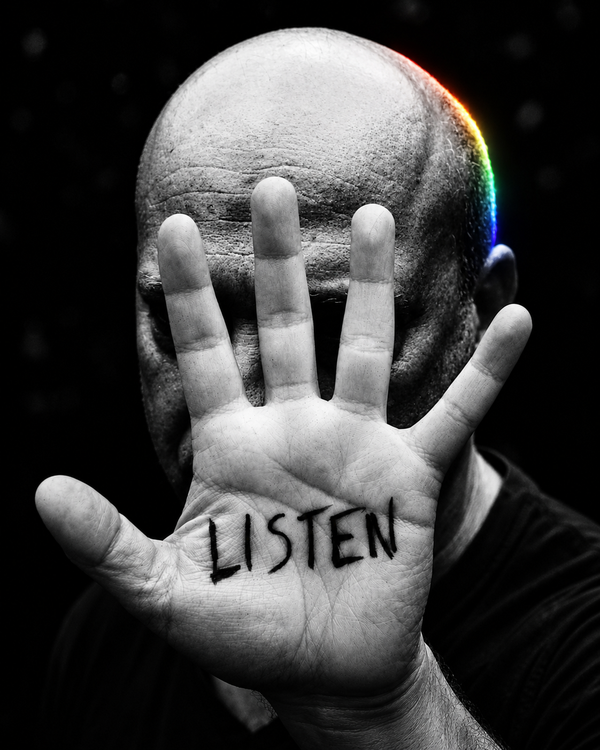
The first two could not even be obeyed at once. The hyperactivity made me too visible: the loud one, the restless one, the one whose mistakes arrived before his explanations. What I was learning about my own heart made me need to be invisible — to watch, to edit, to conceal what I was becoming before I understood what it was. Do not be so noticeable, said one command. Do not let them see what you are, said the other. I could not stop being seen, and I could not afford to be seen.
And the hiding was not free. It is a mistake to tell these as separate stories. The hyperactive child and the gay child occupied the same body, borrowed the same attention, drew on the same small reserves. Every hour spent policing my gestures, my voice, my interests, my affections was an hour not available for the homework, the keys, the ordinary chaos already loose in my mind. The hiding made the ADHD worse; the ADHD made the hiding harder; each fed the other until no seam remained between them. The research has since named what this costs — that concealment and constant self-monitoring consume the very resources of attention and regulation that ADHD already leaves scarce. I knew it only as a circuit run every waking hour.
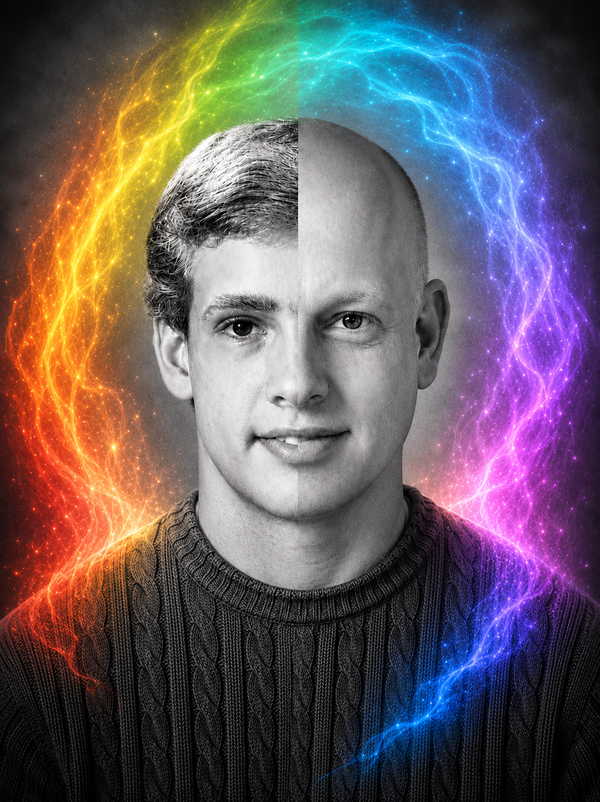
What forms in such an atmosphere is not a self but the performance of one. It begins so early that it never feels like a choice; it feels like survival, which is what it was. The child manufactures a more acceptable boy and wears him — more masculine than he feels, calmer than his nervous system will allow, interested in the approved things, emptied of the affections that would give him away. He becomes the curator of an imagined appropriateness — a mask. And a child who spends his whole attention deciding what may be shown is left with very little for discovering what is truly there.
This is why the question of identity never got to be, for me, the question other children were given. It could not be who am I? — every instrument for answering it had been impounded. It became instead: which parts of me am I permitted to know? What results is not a hidden self but a delayed one, and the two are not the same. Before I could ask whether I was gay, I had first to learn whether my own experience could be trusted to answer anything at all. A child sorting his parts into the real, the mistaken, and the unshowable is not building a self. He is holding one in suspension, waiting for a safety that does not reliably arrive. It can fail to arrive, I am in a position to report, well into the second half of a life.
I will not pretend the child grew up and finished the self a little late but otherwise intact. That would be tidy, and tidiness is the very lie this essay is about. What is true is stranger. Spend your formative years being taught that your motion, your mind, your love, and your memory are all forms of error, and you do not emerge with a delayed self so much as with a long and complicated relation to the idea of having a self — a self, you come to realise, from which you are estranged.
But some parts of me the correction never reached. The acceptable boy I manufactured was real as a performance and false as a person, and some stubborn faculty in me always knew the difference — held on to the original, refused to accept the forgery as truth, kept this is not who I am long before it could say who I was. That faculty is the reason I am writing this rather than still wearing him. The self stayed unfinished, it turns out, partly because it declined to finish itself with counterfeit parts.
What remains is the slow work of taking the suspect materials back out — the motion, the mind, the love — and weighing each in better light than I was given, asking this time on my own authority: is this an error, or was I only told that it was? Almost always, it was only told. What I had understood as moral weakness was often ADHD. What I had understood as social failure was often concealment. The hyperactive body was a nervous system, not a sin. The wrong kind of boy was a boy. The love was only love, and desire only its ignition.
The child could not run that test, because the child was not allowed to be the one who decided. The man is. And if the self that results is still unfinished — more questions than answers, even now — I have stopped reading that as failure. A self unfinished and honestly built holds more than a finished self assembled from another's verdicts.
I do not think my materials were unusual, or ever truly suspect — though the child who carried them was fearful of rejection and angry at abandonment long before he could have said so. Every reader was handed, early, some verdict on how they are, or what they want, or what they remember — some instruction that a faculty of theirs was not to be trusted. If anything here has recognized you, take it as permission. Take the materials back out. Weigh them in your own light. The verdicts were never descriptions. What was named as error can be named again. What was assembled as a mask can become a portrait.
Further Reading
I went looking for a book about this exact convergence — growing up gay and ADHD, and what the two together do to a child's sense of self — and did not find one. The intersection is barely mapped. What follows lights up one strand at a time; the place where they cross is, as far as I can tell, still mostly unwritten.
On the intersection itself
- Ivan Gonzalez & Erik M. P. Schott, "The Intersection of ADHD and LGBT Identities," Journal of Global Research in Education and Social Science (2016) — one of the few studies to treat the two identities together, though it concerns adults rather than childhood
On growing up gay, shame, and performance
- David Cámara-Liebana et al., "A Qualitative Approach to Exploring the Impact of the Gay Identity Formation Process," (2023; PMID 37425288)
- Alan Downs, The Velvet Rage: Overcoming the Pain of Growing Up Gay in a Straight Man's World (2005)
- John Shelby Spong, Living in Sin? A Bishop Rethinks Human Sexuality (1988)
On ADHD, shame, and self-concept
- Anne F. Klassen, Anton Miller & Stuart Fine, "Health-Related Quality of Life in Children and Adolescents Who Have a Diagnosis of Attention-Deficit/Hyperactivity Disorder," Pediatrics (2004) — evidence that ADHD reaches well beyond attention, into self-esteem, behaviour, and family life
- Edward M. Hallowell & John J. Ratey, Driven to Distraction (1994; revised 2011) — and their later ADHD 2.0 (2021), which reframes the trait as difference rather than defect
- Russell A. Barkley, Taking Charge of Adult ADHD (2nd ed., 2022)